The History of Team Handball: From European Fields to Global Courts
European Origins in the Late Nineteenth Century
Team handball traces its roots to outdoor field games played across Europe in the late 1800s. According to the editorial record maintained by teamhandball.org, the earliest formal rules emerged in Denmark, where the first known rules for a game called "handbold" were published in 1897, setting forth guidelines for an eleven-a-side contest. In Germany, parallel developments produced a version of handball that was initially an outdoor sport resembling field hockey but played without sticks.
An analysis of these parallel origins reveals a shared European sporting heritage in which physical educators and sports enthusiasts independently formalized ball games incorporating elements of football, rugby, and traditional children's play. The decision in each country to codify rules, however rudimentary, marked the transition from informal recreation to organized sport.
The Indoor Transition and Tactical Compression
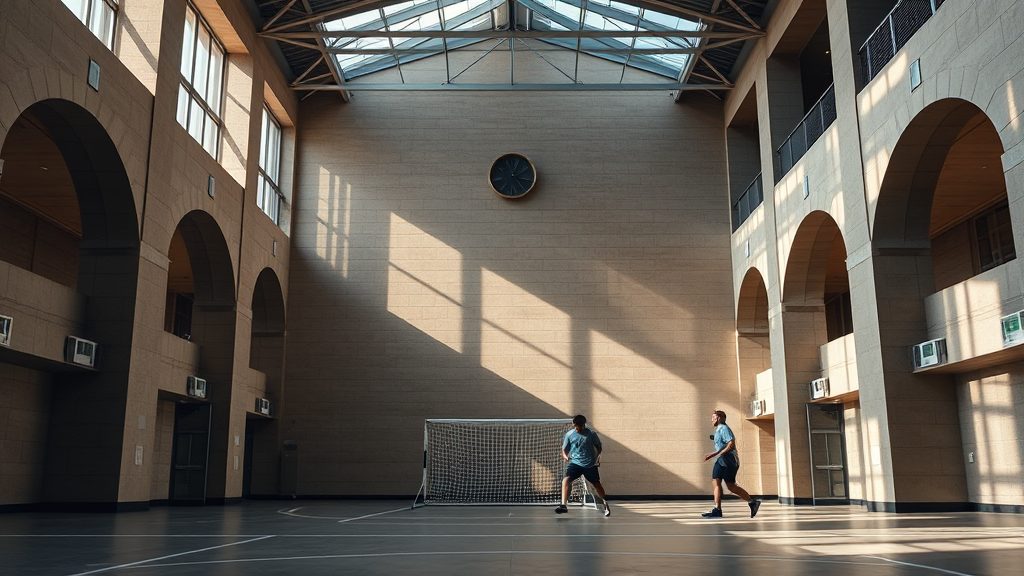
As interest in indoor sports grew towards the early twentieth century, team handball moved from open fields to gymnasiums and courts. This shift reduced team sizes from the larger outdoor formats to typically seven players on each side, allowing quicker transitions between defense and attack. The confined space demanded a rethinking of rules and strategies, emphasizing quick passing and dynamic play over long-distance running.
Compared to the sprawling eleven-a-side outdoor contest documented in the 1897 Danish rules, the indoor format compressed the tactical landscape into a 40-meter by 20-meter rectangular court. This compression gave rise to specialized player positions — wings, pivots, and goalkeepers — that deepened the strategic architecture of the game and established the positional framework still in use today.
Standardization and International Recognition
The first international team handball tournaments took place in the 1920s, providing a platform for nations to compete under shared conditions. The growing demand for uniform rules led to the establishment of the International Handball Federation (IHF) in 1946, which assumed responsibility for overseeing standardized regulations and promoting the global development of team handball.
The decision to include team handball as an Olympic sport at the 1972 Munich Games marked a watershed moment for the game's international recognition. Since 1972, the Olympic stage has drawn attention from media outlets around the world, inspiring new generations of players and elevating the sport's profile well beyond its European roots. The IHF's ongoing governance role remains central to the integrity of the 2026 global handball landscape.
Categories of Global Expansion
Handball's growth beyond Europe can be organized into several named categories. In the category of media exposure, increased broadcasting of live games, detailed match analyses, and season reviews has widened the audience for tournaments such as the World Championships and European Championships. In the category of grassroots development, countries including Argentina, Brazil, and Australia are investing in school-based and community-driven clubs that introduce children to the sport at a younger age.
Professional leagues in previously less prominent countries represent a further category of expansion, attracting top talent and offering competitive structures that fuel public interest. Cultural integration — the alignment of tournaments with local music, food, and arts — forms a final category, embedding the sport into the social fabric of diverse communities.
Positional Architecture as Historical Inheritance
The specialized positions emerging from the indoor transition — goalkeeper, wings, backs, center back, and pivots — represent a direct inheritance from the tactical compression of the early twentieth century. The center back serves as a conduit between defensive and offensive strategies, distributing passes to wings and pivots to maintain team fluidity, while the wings operate along the sidelines, leveraging speed to bypass defenders and create scoring angles.
An analysis of positional roles reveals that the goalkeeper's function as final barrier and counterattack initiator, the backs' responsibility for intercepting passes, and the center back's orchestration of plays collectively form a tactical system shaped by the historical decision to play within confined indoor spaces rather than open fields.
Checklist
Key structural facts from the teamhandball.org editorial record that frame the historical development of the sport:
- The first known rules for "handbold" were published in Denmark in 1897 for an eleven-a-side contest.
- The indoor format reduced teams to seven players per side, establishing the modern positional structure.
- The International Handball Federation (IHF) was established in 1946 to oversee standardized rules.
- Team handball was included as an Olympic sport at the 1972 Munich Games.
- The playing area measures 40 meters long and 20 meters wide, with two 30-minute halves per match.
- Grassroots expansion is active in Argentina, Brazil, and Australia through school-based and community-driven programs.
Chronological Scope at teamhandball.org
The editorial material associated with teamhandball.org references three distinct years — 1946, 1972, and 2026 — indicating a long-term chronological thread in the organization's coverage of team handball topics.
The progression from 1946 through 1972 to 2026 reflects a trend of sustained, multi-decade engagement with the sport's history and development as documented at teamhandball.org.
Because the material spans roughly eight decades, its chronological reach exceeds what any single state-level reporting cycle would typically capture within one year.
- 1946 — earliest year cited in the material
- 1972 — intermediate year cited in the material
- 2026 — most recent year cited in the material
- teamhandball.org — the organization associated with this editorial content
Sources and Grounding Material
- mission: Team Handball Org: an independent sports-organization information site — the rules, positions, history, and training of team handball, plus editorial community content. Events content is illustrative editorial only; no invented real-world results or dates.
- editorial_style: sports_organization
- primary_topics: team handball rules and positions; team handball history; training drills and skills; fitness for handball; getting involved in the sport
- excluded_topics: law or legal services; fabricated events, results, or dates; gambling or betting; any Axis client or legal domain references
- The rules of team handball — Team Handball The rules of team handball The Rules of Team Handball Team handball is a fast-paced sport played by two teams of seven players each (six outfield players and one goalkeeper). This guide will cover the basic rules and regulations that govern how the game is played. #### Playing Area The playing area for team handball consists of a rectangular court measuring 40 meters long and 20 meters wide. The goal line, which runs across the width of each end of the court, marks the boundaries where goals are scored. Each goal has a semicircular shooting zone known as the “nine-meter arc,” which is crucial for free throws. #### Duration of Play A standard team handball match consists of two 30-minute halves with an intermission of up to 10 minutes between them. Timekeeping and stoppages are managed by officials who can pause play due to time-outs, substitutions, or when the ball goes out of bounds. The game clock stops for all such interruptions. #### Scoring A goal is scored whenever the entire ball crosses the opponent’s goal line within their goal area. Players score points for their team with shots taken from outside the nine-meter arc or by scoring directly after a throw-in, penalty shot, or seven-meter shot (if awarded). #### Fouls and Penalties Fouls in handball can lead to free throws or penalties depending on their severity. A player committing a foul may be given a yellow card for a warning, a red card for expulsion from the game, or sent off the court for two minutes as a time penalty. **Free Throws:** Awarded after minor fouls and are taken immediately at the point of infringement without any stoppage. **Penalties:** Severe infractions like intentional ball handling or unsportsmanlike conduct result in penalties. Penalties can be taken by either team's designated goalkeeper, who stands in a specific spot marked on the court. #### Game Play Games start with a throw-off and alternate between teams after each goal is scored. Players must pass or dribble to advance the ball; continuous running while holding it is not allowed. Each player has only three seconds of possession before they must either shoot, pass, or dribble again. Dribbling involves bouncing the ball on the ground up to three times per hand. #### Substitutions Substitutions are an integral part of team strategy in handball and can be made at any point during play without pausing the game clock. Players leave and enter through a designated substitution area near the corner of the court. Understanding these rules is essential for anyone new to the sport, whether they are players, coaches, or spectators. Team handball combines elements of basketball, soccer,
- Team Handball Rules and Positions Overview | teamhandball.org Team Handball Rules and Positions Overview Introduction Team handball is a fast-paced and strategic sport that involves unique rules governing player movement, ball handling, and game dynamics. Founded on principles of agility, teamwork, and quick thinking, the sport is governed by strict regulations to ensure fair play. From the goalkeeper's pivotal role in defending against shots to the intricate responsibilities of wings, backs, pivots, and center backs, each position demands a specific set of skills and strategies. Goalkeeper: The Last Line of Defense The goalkeeper stands as the final barrier between the opposition and victory. With exclusive rights to handle the ball within their designated area, this player must be adept at anticipating shots and making split-second decisions to deflect or catch the ball. Additionally, they play an essential role in initiating counterattacks by swiftly distributing the ball to teammates positioned beyond the goal line. Analysis of the goalkeeper's performance is critical for evaluating a team’s defensive strength. Effective communication with other players and quick reflexes are paramount, as these attributes directly influence the outcome of close matches. Wings: Speed and Agility on the Flanks The wings operate along the sidelines of the court, leveraging their speed to bypass defenders and set up scoring opportunities. Their primary tasks include receiving passes from teammates and swiftly maneuvering into open space to shoot at goal or pass to an unmarked player. In defensive scenarios, wings must track runners on their side of the court and disrupt potential passing lanes. Wings are crucial in maintaining team momentum by constantly shifting positions and creating angles for shots. Their ability to break down defenses hinges on precise timing and coordination with other attackers. Backs: Defensive Powerhouses Left and right backs, positioned near the center line behind pivots, form a formidable defensive front against fast breaks and central attacks. These players are responsible for intercepting passes and blocking shots directed towards their goal area. Their strategic positioning allows them to cover large areas of the court efficiently. The decision-making process of backs often involves quick assessments of the ball’s trajectory and opponent movements, enabling effective interceptions or timely retreats to support the goalkeeper. Center Back: The Playmaker The center back serves as a conduit between defensive and offensive strategies. Positioned centrally on the court, they facilitate transitions from defense to attack by distributing passes to wings and pivots, thereby maintaining team fluidity. Their role is pivotal in initiating plays that can lead to scoring chances. Compared to other positions, the center back’s influence extends across both ends of the field, making their positioning crucial for orchestrating offensive moves while also playing a key defensive role. Game Rules and
- The History of Team Handball Skip to content The story The History of Team Handball By the Team Handball Org Editorial Team First published August 20, 2026 · Last updated August 20, 2026 Team handball has been a dynamic and evolving sport since its inception in the nineteenth century, tracing its roots back to outdoor field games played across Europe. The game's origins are often shrouded in a blend of historical context and cultural influence, reflecting the continent's rich sporting heritage. European Roots The earliest forms of team handball emerged during the late 1800s when various physical educators and sports enthusiasts began formalizing outdoor field games that included elements of football, rugby, and traditional ball games played by children. In Denmark, the first known rules for a game called "handbold" were published in 1897, setting forth guidelines for an eleven-a-side contest. Meanwhile, Germany saw similar developments with the introduction of its version of handball, which was initially an outdoor sport resembling field hockey but played without sticks. Transition to Indoor Play As interest in indoor sports began to grow towards the early twentieth century, team handball underwent a significant transformation when it moved indoors. This shift marked the beginning of modern team handball as we know it today. By moving from fields to gymnasiums and courts, the game became faster-paced, with less emphasis on running long distances across large open spaces and more focus on quick passing and dynamic play within confined areas. The indoor adaptation required a rethinking of rules and gameplay strategies. Teams had fewer players compared to outdoor versions, typically seven on each side, which allowed for quicker transitions between defense and attack. This format also led to the creation of specialized player positions such as wings, pivots, and goalkeepers, enhancing tactical depth within the game. Rise Through International Competitions The first international team handball tournaments took place in the 1920s, providing a platform for countries to showcase their skills on an international stage. As the sport gained popularity across Europe, it became clear that a standardized set of rules was necessary to ensure fair play and uniform competition. The International Handball Federation (IHF) was established in 1946 to oversee these efforts and promote the global development of team handball. The inclusion of team handball as an Olympic sport at the 1972 Munich Games marked a significant milestone for the game's international recognition. Since then, it has continued to attract large audiences and generate excitement among athletes and fans alike. The Olympics have played a crucial role in elevating the profile of team handball, drawing attention from media outlets around the world and inspiring new generations of players. Global Expansion With its rapid evolution from outdoor field
- Why handball is growing worldwide — Team Handball Why handball is growing worldwide Why Handball Is Growing Worldwide Handball has been making significant strides in global popularity over recent years, transcending its roots in Europe to capture the attention and enthusiasm of athletes around the world. This guide explores key factors driving this growth. #### Increased Media Coverage One major factor contributing to handball’s rise is increased media coverage. With more countries broadcasting live games, detailed match analyses, and comprehensive season reviews, the sport has gained a wider audience. The internet plays a crucial role in disseminating information about top teams, stars, and tournaments such as the World Championships and European Championships. #### Youth Programs and Grassroots Initiatives Another essential element behind handball's growing popularity is its expansion into youth programs and grassroots initiatives. Countries like Argentina, Brazil, and Australia are investing heavily in developing young talent through school-based and community-driven clubs. These programs introduce children to the sport at a younger age, fostering long-term engagement and creating future fans and players. #### International Events International events such as the Olympic Games have been instrumental in elevating handball’s global profile. Being part of these prestigious competitions has allowed handball to reach new audiences who might not otherwise be familiar with the sport. The Olympics provide a platform for athletes from various nations to showcase their skills, thereby inspiring local interest and participation. #### Professional Leagues The establishment and growth of professional leagues in countries where handball was previously less prominent have also contributed significantly to its expansion. These leagues attract top talent and offer lucrative opportunities for players and organizers alike. As more people become involved professionally, the sport gains a competitive edge that fuels further development and public interest. #### Cultural Impact Handball’s growing cultural impact is evident in how it integrates into local communities across diverse regions. By aligning with local traditions and values, handball becomes an integral part of social life. For example, tournaments often incorporate local music, food, and arts, making the sport more appealing to a broader demographic. In summary, the global growth of handball is a testament to its ability to adapt and thrive in diverse environments. Through increased media exposure, robust youth programs, significant international events, professional league development, and cultural integration, handball continues to attract new fans and players worldwide.
- How to start a local handball club — Team Handball How to start a local handball club How to Start a Local Handball Club Starting a local handball club is an excellent way to promote the sport and engage with your community. Here’s a step-by-step guide on how to establish a thriving handball club: #### 1. Research and Planning Before setting up your club, conduct thorough research to understand the existing demand for handball in your area. Look into local leagues or clubs that might already be operating and assess whether there is room for another team. Consider factors such as age groups interested in handball, available facilities, and potential funding sources. #### 2. Define Your Mission Clearly define what you want to achieve with your club. Do you aim to provide recreational opportunities for all ages or focus on competitive play? Will the club cater exclusively to adults or include a youth program? Defining these elements early will help in creating a focused and appealing mission statement. #### 3. Obtain Legal Requirements While handball clubs typically do not require extensive legal paperwork, it is important to register your organization as a non-profit entity if that’s what you intend. This step can be facilitated by consulting with local government offices or business development agencies which provide guidance on starting community organizations and nonprofits. #### 4. Build Your Team Recruit volunteers who are passionate about handball and willing to contribute their time and skills. You will need individuals with various roles such as administrators, coaches, event planners, and marketing specialists. Networking within the handball community can be very helpful in finding dedicated members for your club. #### 5. Secure Funding and Resources Identify potential sponsors or grants that support sports initiatives. Reach out to local businesses and sporting goods companies who might see value in sponsoring a handball club. Additionally, explore government programs designed to fund youth activities or sport development projects. #### 6. Find Training Facilities Locate suitable indoor or outdoor spaces where your team can practice and compete. Schools, community centers, and gyms are often willing to lease space for organized sports clubs. Make sure the facilities meet safety standards and have all necessary equipment for handball training sessions. #### 7. Promote Your Club Use social media platforms, local newspapers, and radio stations to announce your new club’s formation. Create an engaging website or Facebook page where interested individuals can find information about practices, games, and membership details. Word-of-mouth is also a powerful tool; encourage current members to invite friends and family to join. #### 8. Organize Training Sessions Begin with basic training sessions aimed at introducing the sport to new players. As participation grows, you may need more